中国国际电视台&新华每日电讯专题报道|天津大学迎来全国首届脑机科学与技术专业本科生
2026-09-04
新专业、新模式、新学生。在天津大学,全国首届脑机科学与技术专业本科生即将走入课堂。
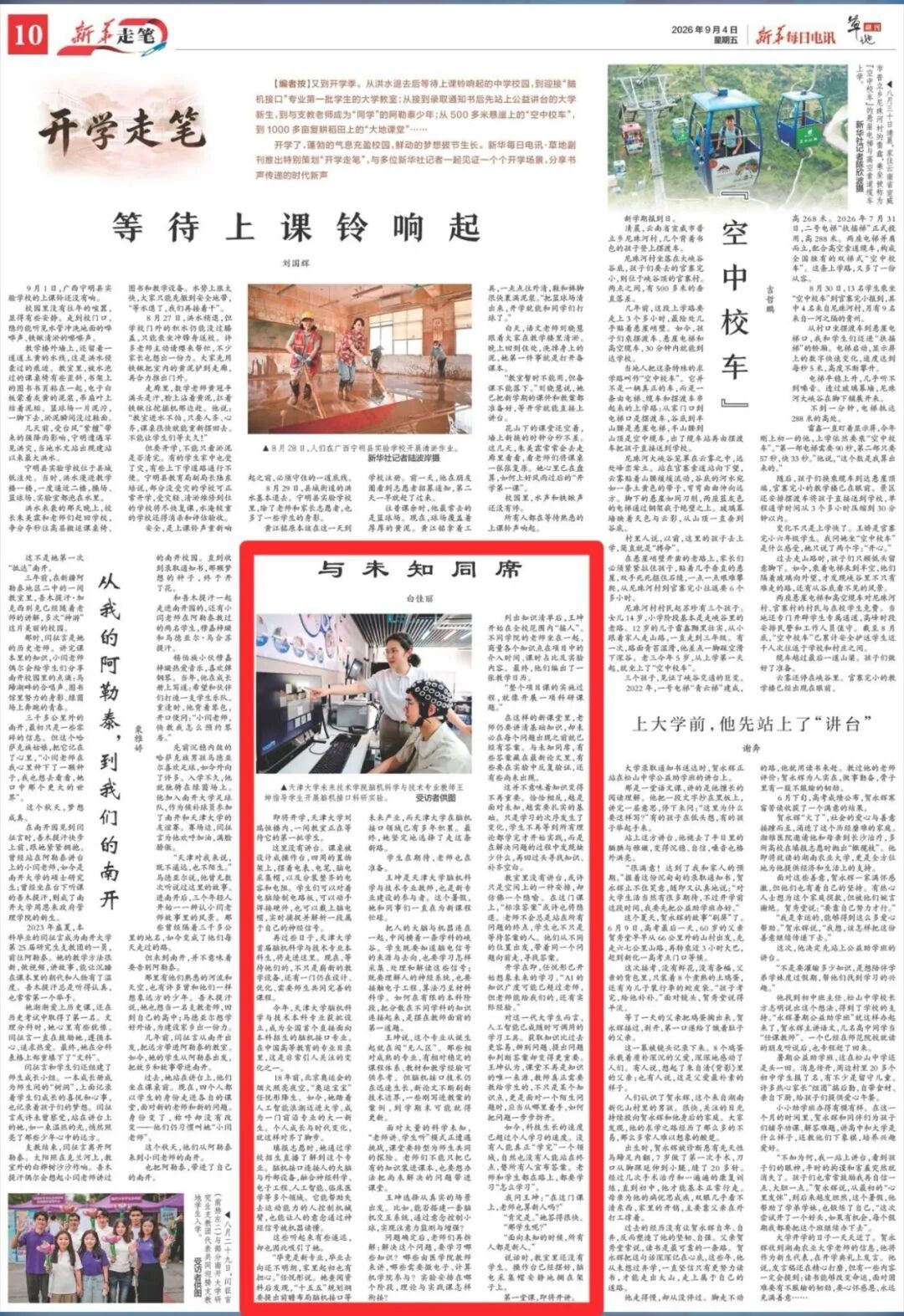
9月3日,中国国际电视台(CGTN)发表文章《Education for New Industries: Chinese universities adapt to emerging talent needs》聚焦天津大学创新培养模式,以应对未来产业对专业人才的新需求。9月4日,《新华每日电讯》刊发文章《与未知同席》 ,记录这门新专业在学科交叉前沿的开拓与实践。
Education for New Industries: Chinese universities adapt to emerging talent needs
China has added 38 undergraduate majors this year, many focusing on emerging fields such as embodied intelligence, brain-computer science and the low-altitude economy. The move aims to better prepare students for the changing needs of emerging industries. Our reporter Zhou Yixin has more.
From artificial intelligence to robotics, emerging technologies are creating new industries — and new demand for specialized talent.
Brain-Computer Science and Technology is one of the new majors introduced to meet that demand. The field has potential applications ranging from healthcare to advanced human-machine interaction. Tianjin University in North China is offering the first undergraduate program.
ZHOU YIXIN Tianjin "Students will start getting hands-on experience from their very first year. They will regularly go into labs and work on brain-computer interface projects, while developing skills across fields including electronics, neuroscience, artificial intelligence, and more."
Instead of learning theory first and applying it later, the program uses project-based learning to connect classroom knowledge with real-world applications.
WANG KUN, Professor of Brain-Computer Science and Technology, Medical School of Tianjin University "Students learn by working on projects and apply what they learn in class to something they can actually build. These projects are designed around industry needs, so what they study is closely related to real-world problems."
Some students here are already experiencing that approach. Duan Jinming studies biomedical engineering and joined a brain-computer interface research project early in his undergraduate studies. His project explores how brain signals can be used to control machines such as unmanned vehicles.
DUAN JINMING, Undergraduate student, Biomedical Engineering, Tianjin University "Working with brain signals involves neuroscience, while controlling machines requires control theory and programming. The project brings all of these different areas together, helping me better understand and apply what I've learned."
Those who have been working in the field for years say earlier training could better support students' future development.
CHEN WEIZE, PhD student, Intelligent Medical Engineering, Tianjin University "Starting from the undergraduate level allows students to get involved in practical projects earlier and better understand the challenges facing brain-computer interface technology. They can then apply what they learn to explore ways to push the technology forward."
For the first group of freshmen entering the new major this year, stepping into a field whose future is still being shaped is both exciting and challenging.
REN YUETONG, Freshman student, Brain-Computer Science and Technology, Tianjin University "Because this is a completely new major, no one really knows exactly where it will lead. But I also feel a sense of responsibility. I hope I can make the most of this opportunity."
Across China, as new technologies reshape industries and create new demand for talent, universities are adapting both what students learn and how they learn it — preparing them for the industries of the future. Zhou Yixin, CGTN, Tianjin.
新华走笔|与未知同席
即将开学,天津大学刘瑞恒楼内,一间教室正在等待它的第一批学生。
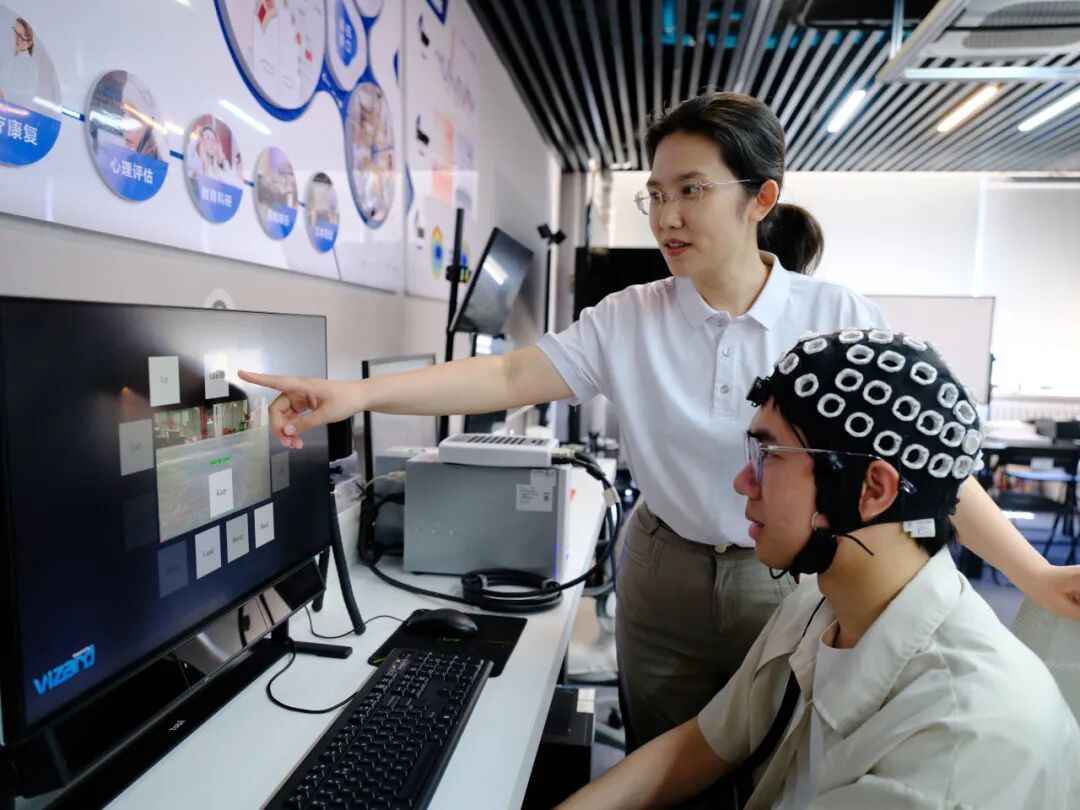
这里没有讲台。课桌被设计成操作台,四周的置物架上,摆着电表、电笔、脑电采集帽,以及分装整齐的电容和电阻。学生们可以对着电脑绘制电路板,可以动手焊接硬件,也可以戴上脑电帽,实时捕捉并解析一段属于自己的神经信号。
再过些日子,天津大学首届脑机科学与技术专业本科生,将走进这里。现在,等待他们的,不只是崭新的教学设备,还有一门仍在设计、优化、需要师生共同完善的课程。
今年,天津大学脑机科学与技术本科专业获批设立,成为全国首个直接面向本科招生的脑机接口专业。在中国高等教育的专业目录里,这是非常引人关注的变化之一。
18年前,北京奥运会的烟火照亮夜空,“奥运宝宝”任悦彤降生。如今,她踏着人工智能浪潮迈进大学,成为一门前沿专业的大一新生。个人成长与时代变化,就这样对齐了脚步。
填报志愿时,她通过学校招生直播了解到这个专业。脑机接口连接人的大脑与外部设备,融合神经科学、电子工程、人工智能、临床医学等多个领域。它能帮助失去运动能力的人控制机械臂,也能让人的意念通过神经信号被机器读懂。
这些听起来有些遥远,却也因此吸引了她。
“毕竟是新专业,毕业去向还不明朗,家里起初也有担心。”任悦彤说。她查阅资料后发现,“十五五”规划纲要提出前瞻布局脑机接口等未来产业,而天津大学在脑机接口领域已有多年积累。最终,她坚定地选择了走这条新路。
学生在期待,老师也在准备。
王坤是天津大学脑机科学与技术专业教师,也是新专业建设的参与者。这个暑假,她和同事们一直在为新课程忙碌。
把人的大脑与机器连在一起,中间横着一条学科的峡谷。学生既要知道脑电信号的来源与去向,也要学习怎样采集、处理和解读这些信号;既要理解人的神经系统,也要接触电子工程、算法乃至材料科学。如何在有限的本科阶段,把分散在不同学科的知识连接起来,是摆在教师面前的第一道题。
王坤说,这个专业从诞生起就在闯“无人区”。那些相对成熟的专业,有相对稳定的课程体系、教材和教学经验可供参考。但脑机接口技术仍在迅速生长,新论文不断刷新技术边界,一些刚写进教案的案例,到学期末可能就得更新。
面对大量的科学未知,“老师讲、学生听”模式正遭遇挑战,课堂要转型为师生共同的探险。老师们不能只把已有的知识装进课本,也要想办法把尚未解决的问题带进课堂。
王坤选择从真实的场景出发。比如,能否搭建一套脑机交互系统,通过意念控制小球,实现注意力监测与增强?
问题确定后,老师们再拆解:解决这个问题,要学习哪些知识?哪些由医学院教师来讲,哪些需要微电子、计算机学院参与?实验安排在哪个阶段,理论与实践课怎样衔接?
列出知识清单后,王坤开始在全校范围内“摇人”。不同学院的老师坐在一起,商量各个知识点在项目中的介入时间、课时占比及实验内容。最终,他们编出了一张教学日历。
“整个项目课的实施过程,就像开展一项科研课题。”
在这样的新课堂里,老师仍要讲清基础知识,却未必在每个问题出现之前就已经有答案。与未知同席,有些答案藏在最新论文里,有些要在实验中反复验证,还有些尚未出现。
这并不意味着知识变得不再重要。恰恰相反,越是面对未知,越需要扎实的基础。只是学习的次序发生了变化,学生不再等到所有理论都学完才开始实践,而是在解决问题的过程中发现缺少什么,再回过头寻找知识、补齐空白。
教室里没有讲台,或许只是空间上的一种安排,却仿佛一个隐喻。在这门课上,“标准答案”或许也将隐退。老师不会总是站在所有问题的终点,学生也不只是等待答案的人。他们从不同的位置出发,带着同一个问题向前走,寻找答案。
开学在即,任悦彤已开始想象未来的学习。“AI的知识广度可能已超过老师,但老师能给我们的,还有实际经验。”
对这一代大学生而言,人工智能已成随时可调用的学习工具。获取知识比过去更容易,辨别问题、提出问题和判断答案却变得更重要。王坤认为,课堂不再是知识的唯一来源,教师真正需要教给学生的,不只是某个知识点,更是面对一个陌生问题时,应当从哪里着手,如何把问题一步步拆开。
如今,科技生长的速度已超过个人学习的速度。没有人能真正“学完”一个领域,自然也没有人能站在终点,替所有人宣布答案。老师和学生都在路上,都要学习“怎么学习”。
我问王坤:“在这门课上,老师也算新人吗?”
“肯定是。”她答得很快。
“那学生呢?”
“面向未知的时候,所有人都是新人。”
说话时,教室里还没有学生。操作台已经摆好,脑电采集帽安静地搁在架子上。
第一堂课,即将开讲。